Keevallik & Hofstetter have edited a special issue on the phenomenon of Sounding for Others, in Language & Communication. Thank you to our wonderful collaborators for their excellent papers. Summaries of the texts can be found below:
Editorial abstract by Keevallik & Hofstetter:
Standard models of language and communication depart from the assumption that speakers encode and receive messages individually, while interaction research has shown that utterances are composed jointly (C. Goodwin, 2018), dialogically designed with and for others (Linell, 2009). Furthermore, utterances only achieve their full semantic potential in concrete interactional contexts. This SI investigates various practices of human sounding that achieve their meaning through self and others’ ongoing bodily actions. One person may vocalize to enact someone else’s ongoing bodily experience, to coordinate with another body, or to convey embodied knowledge about something that is ostensibly only accessible to another’s individual body. This illustrates the centrality of distributed action and collaborative agency in communication.
Summary of the special issue:
Borne out of workshops with the wonderful authors on this issue, the papers discuss how others’ bodies–their experiences & actions—are enacted vocally by interlocutors, especially (though not only) with non-lexicals.
The issue covers a wide range of activities (casual interactions, instruction, exercise & training, play, and infant-parent interaction) and languages (English, Estonian, German, Hebrew, Italian, & Turkish).
By giving voice to bodily events, especially co-participants’ sensations, speakers ‘do being with’ others, emphasizing their shared understanding, synchrony, & shared access. Allow me to introduce alphabetically our amazing authors:
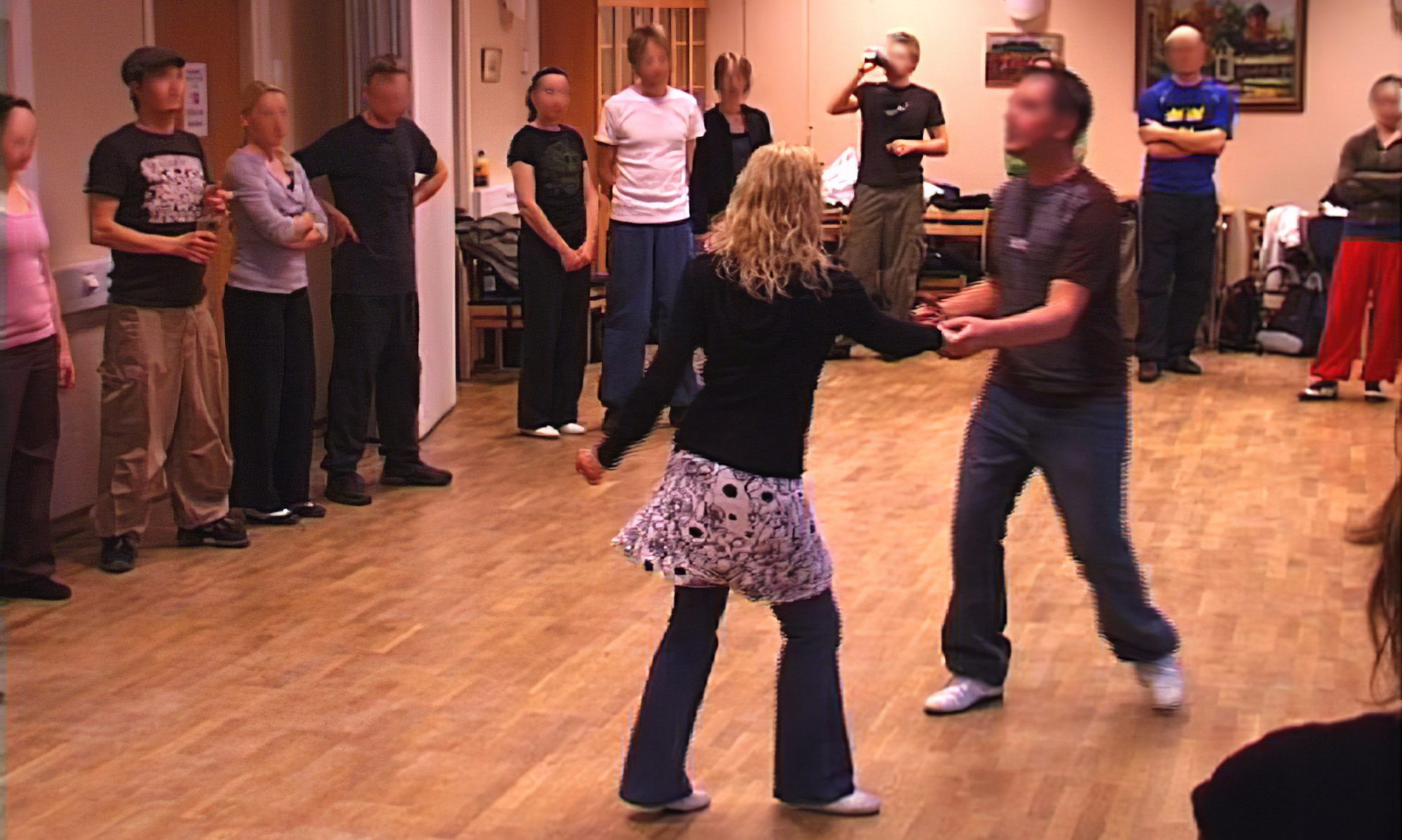
Saul Albert & Dirk vom Lehn https://doi.org/10.1016/j.langcom.2022.10.001 present an analysis of novice dancers using #nonlexicals to mark, evaluate, account for, & coordinate around movement events that are not clearly delineated, complete, or developed yet. This provides them with a resource for intersubjectivity as they come to grips with new moves together. Participants “demonstrate the continuity between embodiment, non-lexical vocalization, and a fully lexicalized, metapragmatically labelled action.”
Yotam Ben-Moshe https://doi.org/10.1016/j.langcom.2022.12.006 analyzes gasping in Hebrew interactions, examining how they express emotion & attention. In particular, the article focuses on moments where gasping participants display stances (surprise & fear, but also appreciation) towards others’ stories & told experiences. It concludes with an evaluation of how gasps take advantage of their liminal semantic content to respond & be in the moment with others’ stories, while not committing to further assessments.
Marina Cantarutti https://doi.org/10.1016/j.langcom.2022.08.002 demonstrates how responsive animations, or enacted displays of non-present/imagined events, are used to ‘do being others’, & moreover to display shared experience in stories about negative happenings. Through the responsive animations, the participants amplify the self-deprecating aspects of the prior stories, but also demonstrate their own rights to tell about that event & create moments of shared experience. The often playful animations “allow participants to momentarily blur the boundaries between themselves and others to relish in each other’s inadequacies” while also acting as “a safeguard against potential offence”.
Hofstetter & Keevallik https://doi.org/10.1016/j.langcom.2022.11.002 present an analysis of how a Pilates instructor uses their voice to sound for and with exercising student bodies, using prosody (an accountably paired set of stylized contours) to coordinate with movements. The instructor & students organize their synchrony around the vocalizations, mutually adjusting for each other’s rhythms. The participants thereby intercorporeally attune to each other with multimodal resources.
Lorenza Mondada https://doi.org/10.1016/j.langcom.2022.11.006 presents the audible-visible production of smelling in a cheese tasting class, demonstrating the way sensation is made highly public & accessible. The paper furthermore shows how sense expertise is made accessible & intersubjective, by providing slots for students to calibrate their sensing with expert categories. With this paper, there is almost an irony in that the asymmetry of expert smelling (which at the surface seems to support sensing-as-inaccessible, individual) is defied by the highly public work done to make the sensations intersubjective.
Iris Nomikou https://doi.org/10.1016/j.langcom.2023.05.001 presents analysis of how mothers sound for & on behalf of infant strain (kicks, pulling, reaching, etc.) during nappy changing. By sounding for the infant, mothers socialize them & display how to relevantly produce sensation as public & mutually knowable. Furthermore by drawing on sound repertoire that infants already have & produce, mothers scaffold infants’ understanding of sounds as meaningful & linguistic.
Misao Okada https://doi.org/10.1016/j.langcom.2023.01.005 analyzes boxing instruction, demonstrating how the instructor fits repetitions to the rapidly evolving movements & circumstances of the boxer student. The instructor changes their instructions prosodically according to the trajectory of the boxer’s actions, which also alters what is made sequentially relevant (compliance vs. being together). The asymmetry of senses is managed by the timing of the repetitions, with the instructor sounding for & co-constructing the boxer’s actions, & thereby demonstrating her expertise & attention.
Burak Tekin https://doi.org/10.1016/j.langcom.2022.11.001 demonstrates how video game players construct events as cheerable, & moreover how they coordinate choral (simultaneous but flexible) responses to game events. The choirs allow participants to display stances towards game events as well fluidly join & leave cheering displays. Cheering together not only appreciates the game event for the playing participant, but produces affiliative collectivities together.
Ann Weatherall https://doi.org/10.1016/j.langcom.2023.01.004 presents a study of feminist self-defence classes, showing how students respond to demonstrations of self-defence techniques with pain cries, sounding for the perceived effect of the technique, as well as using other embodied displays of pain such as grimaces & doubling over the body. The students thereby demonstrate their understanding of the demonstration on imagined recipients, & the possibility of enacting on behalf of imagined, non-present others.
 Non-lexical vocalizations